CSS is a programming language that allows you to manage the formatting of HTML files. The abbreviation CSS stands for Cascading Style Sheets. Here, “Style” refers to the layout of a website. By using CSS, an HTML file can be transformed into a visually appealing website. In fact, CSS allows you to separate a website’s design from its content. How exactly this works is explained in detail in the following paragraph. After that, we’ll list the advantages of CSS as a programming language.
How does CSS work?
CSS works by applying styles to HTML elements. This is done via selectors, which select the elements to which the styles should be applied. These styles can specify properties such as color, font, margins, padding, and layout. CSS files are usually stored separately as .css files, which are linked to HTML files via a <link> tag in the <head> section of the HTML documents.
Here is a simple example of an HTML document linked to a CSS file:
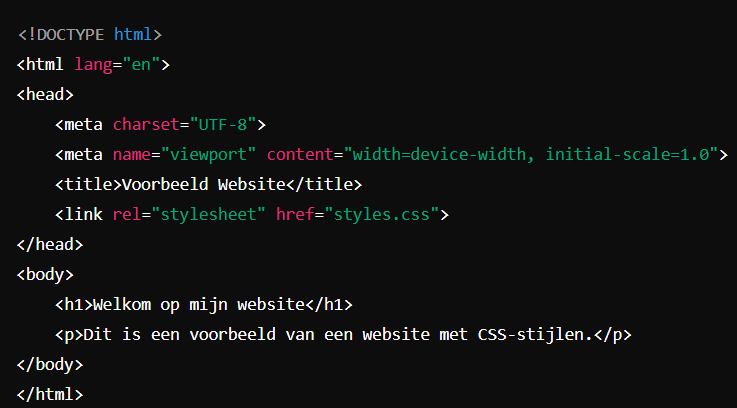
And here is a simple example of an associated CSS file (styles.css):
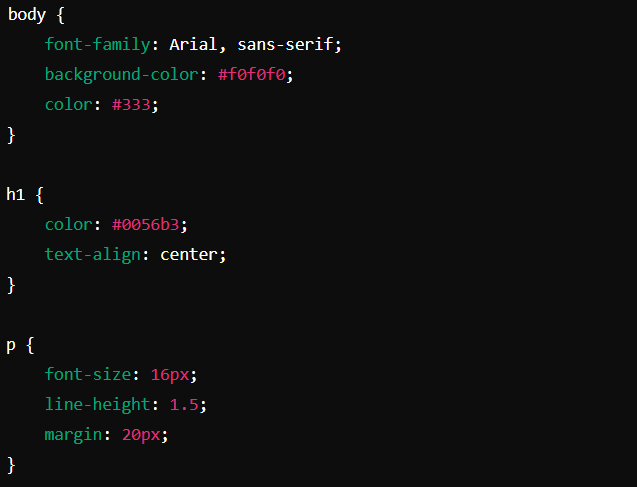
In this example, the CSS file defines the background color, text color, and font of the webpage body, as well as the formatting of the headings and paragraphs. By storing these styles in a separate file, the website’s content is separated from its formatting, which facilitates maintenance and updates.
Benefits of CSS
CSS offers several advantages for web development:
1. Separation of Content and Formatting
One of the biggest advantages of CSS is the separation of content (HTML) and styling (CSS). This makes it easier to customize a website’s style without changing the HTML structure.
2. Reusability
With CSS, you can reuse styles across multiple pages. By linking a single CSS file to multiple HTML files, you can apply consistent formatting throughout the entire website.
3. Maintainability
Maintaining a website becomes easier because the layout is managed in a single central location. If you want to change the style of an element, you only need to adjust it in the CSS file.
4. Efficiency
CSS reduces the amount of code required to style a website. This leads to faster loading times and improved website performance.
5. Responsive Design
With CSS, you can create responsive designs that adapt to different screen sizes and devices. This is often achieved using media queries.
6. Flexibility and Control
CSS offers a great deal of flexibility and control over the website’s presentation. With advanced CSS techniques such as flexbox and grid layout, you can create complex layouts that were previously difficult to achieve.
7. Accessibility
By using CSS, you can improve the accessibility of your website. A clear separation between content and formatting allows the content to be read more effectively by screen readers and other assistive technologies.
In summary
CSS is an essential tool for modern web development. It enables developers to manage the layout of web pages and separate it from the content, leading to better maintenance, reusability, and efficiency. With the many benefits CSS offers, it’s no wonder it has become a fundamental part of building attractive, user-friendly, and responsive websites.