

If you’ve ever used a website where data was updated without reloading the entire page, you’ve experienced the power of AJAX.
AJAX stands for Asynchronous JavaScript and XML; it is a technology that has revolutionized the way web pages communicate with servers and display data. But what exactly is AJAX, and how does it work? Let’s take a closer look at this fascinating technology.
What is AJAX?
AJAX is a technique used to make web pages more dynamic and interactive. Instead of refreshing an entire web page every time new data is needed, AJAX can update parts of the page without reloading the entire page. This results in faster, more responsive web applications and an improved user experience.
How does AJAX work?
AJAX works by utilizing a combination of various technologies:
- HTML/XHTML and CSS: for the presentation of the data.
- DOM (Document Object Model): for dynamic data display and interaction with the page.
- XMLHttpRequest Object: for asynchronous communication with the server.
- JavaScript: For manipulating the DOM, processing server responses, and creating interactive functionality.
- XML or JSON: for exchanging data between the client and the server.
At the heart of AJAX is the XMLHttpRequest object, which is used to send requests to the server and process the responses without refreshing the page. Here is a simple example of how AJAX works:
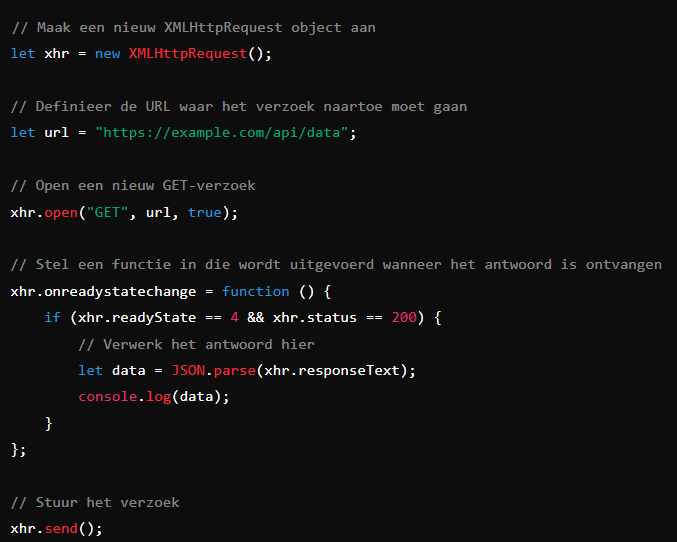
In this example, the code sends a GET request to an API and processes the response as soon as it becomes available, without refreshing the web page.
Why use AJAX?
AJAX offers several advantages for web developers and users:
- Faster interaction: because only the necessary data is updated, web applications can respond more quickly to user input.
- Better user experience: the user does not have to wait for full page reloads, resulting in a smoother and more seamless experience.
- Lower bandwidth: because only the necessary data is exchanged, AJAX can reduce network traffic, which is particularly important for mobile devices and slow connections.
- Asynchrony: AJAX requests can be executed asynchronously, meaning the user can continue with other tasks while the data is loading.
Applications of AJAX
AJAX is used in a wide range of web applications. Some popular applications include:
- Form input validation: validation of user input without reloading the page.
- Live search results: displaying immediate search results as the user types, as seen in search engines and e-commerce websites.
- Social media updates: real-time updates of posts, likes, and comments without refreshing the page.
- Dynamic content loading: updating sections of a web page with new content, such as news feeds and product catalogs.
In summary
AJAX has had a massive impact on the way modern web applications are developed and used. By enabling data to be loaded and processed asynchronously, without refreshing the page, AJAX has contributed to faster and more responsive web experiences. Whether you’re a web developer striving for more efficient applications or a user who enjoys smooth interactions on the web, AJAX plays a crucial role in today’s internet landscape.

